Reunited.
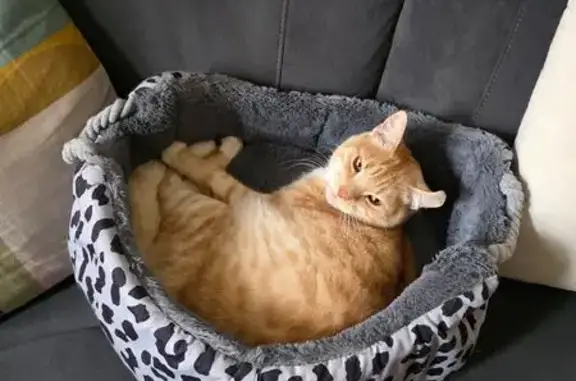
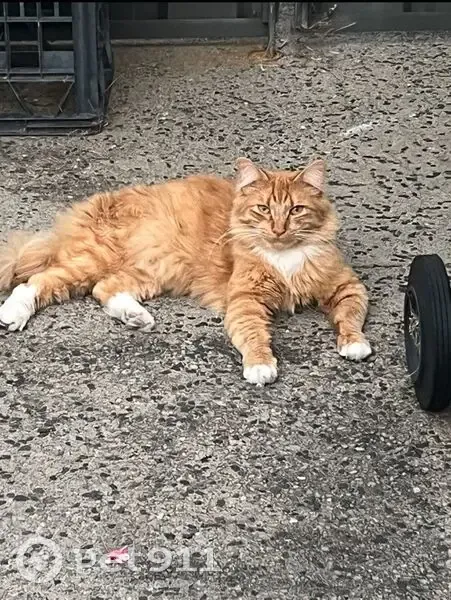
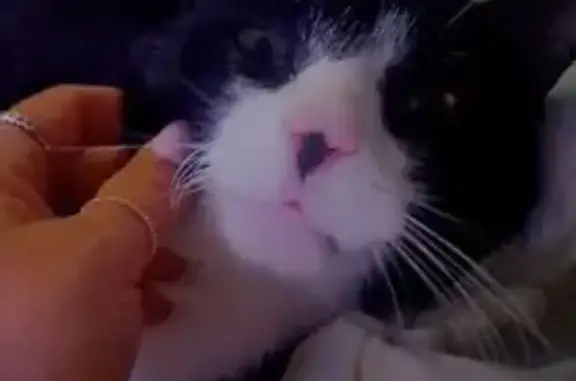
Lost Friendly Cat: Ginger & White, Marion - photo

Lost Friendly Cat: Ginger & White, Marion

glengowrie

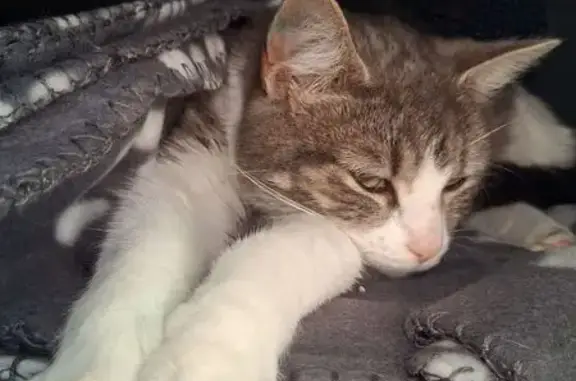
Ginger and white he is desexed and microchipped. Hes very friendly and long haired with a bushy tail. He went missing from our new house we just moved into about 4-5 weeks ago. He has done this before and went back to the old house about 1-2kms away and we brought him home and now he has escaped again. He loves jumping fences and our fence is quite high. He has done this a few times and has been coming back but this time its been alot longer.

The user has hidden the phone number

How you can help

glengowrie
Listing number
al494233
Pet's gender
Male
Added
Tue, 25.11.2025
Lost
Fri, 21.11.2025

Comments 9

Lost and Found Pets Australia
Listing al494233 posted on Facebook Pet911 South Australia
Published: 26 November 2025, reply
Facebook group comment
They need to be kept inside for 3 weeks when relocating. See full comment
Published: 27 November 2025, reply
Facebook group comment
Could be hiding close by if scared. Might be easier to find them at night when it's quiet. Walk the neighbourhood and call out to them. See full comment
Published: 27 November 2025, reply
Facebook group comment
https://pethelpful.com/cats/lost-cat?fbclid=IwAR3FIu4Y_ADaIljfiJGc65UpnWxegpM-f37lWOgKSfTk5skHKNANR80Zpu8. See full comment
Published: 27 November 2025, reply
Facebook group comment
https://www.scaredycats.com.au/find-lost-cat/find-lost-cat-step-by-step-guide/?fbclid=IwAR2rlR7tQICwPPYWXVckyG0Poexv4ECI4HepjVJkbEqBA_pErtIb8MuwqPo. See full comment
Published: 27 November 2025, reply
Facebook group comment
Research by Missing Animal Response Network (MAR): A study was conducted by the University of Queensland where 1,232 cat owners who’d lost a cat took part (Kat Albrecht and Dr. Jacquie Rand conceived the study and UOQ and MPP collaborated on the study). Here is a summary of results: • The method most successful in recovering a missing cat was conducting a thorough physical search of the area. • The median distance found (how far the cats traveled) for missing outdoor-access cats was 315m. This is roughly a 17-house radius from their home. • The median distance for escaped indoor-only cats was much less—it was only 50m which is roughly a 2-3 house radius from their home. Obtaining permission from your neighbours to search their property is critical! Simply handing them a flyer and asking them to “keep an eye out” IS NOT ENOUGH! Your neighbour is not going to get on hands and knees to look under their deck or house, yet that is where your cat is most likely to be! It is up to you the owner to conduct this type of slow, methodical search. A flashlight should be used to see your cat’s eye shine in dark places. Additional Lost Cat Behaviors The Silence Factor: This is a term to describe lost cat behavior when a displaced cat will hide in silence. It is a natural form of protection. The Silence Factor kills many cats that may be sick or injured and hiding, as owners are typically busy “looking” for their cat at the local shelter or putting flyers on telephone poles. Instead they should be conducting an aggressive, physical search of the immediate area remembering the cat is likely to be close by but hiding in silence. The Threshold Factor: This is an interesting behavioral pattern where a cat that is hiding eventually breaks cover and meows, return to their home or finally enters a humane trap. While some cats take hours to a few days to reach their threshold, many take several days (typically 10 to 12 days) before they break cover, most likely due to starvation and thirst, although more research needs to be conducted into this. Myths for finding lost cats: The MAR Network does NOT recommend using kitty litter placed outside your home as the urine/faeces scent could attract aggressive cats into a yard where the missing cat may be hiding. When an indoor-only cat escapes, it is often hiding within the territory of another (outside) cat. Dirty cat litter can attract community “toms” (intact males)-predisposing them to want to defend their territory and draw them into an area where the displaced cat may be hiding. MAR do not advise posting a reward as this can lead people to chase your cat possibly scaring it into a yard where dogs reside or onto a busy road. For full article please search online for Missing Animal Response (MAR) Network. IMPORTANT NOTICE: If your pet’s microchip is registered with HomeSafe ID, please be aware that their database is no longer operational, and any registered details are no longer accessible. To check which company currently manages your pet’s microchip, visit petaddress online and enter the microchip number. If it indicates that the chip is linked to HomeSafe ID, you will need to re-register the microchip with an active registry such as Central Animal Records (CAR), Australasian Animal Registry (AAR), or another provider of your choice. This can be done online and is relatively simple. Please note that once the transfer is initiated, it may still take a number of weeks for the updated information to appear in the database. If you do not know your pet’s microchip number, a veterinary clinic you’ve previously visited should be able to provide it from their records. Hope this helps, good luck 🐾🐈‍⬛. See full comment
Published: 27 November 2025, reply
Facebook group comment
Please check found groups - Cats found in SA statewide https://www.facebook.com/share/1BDgXJ9zQv/. See full comment
Published: 27 November 2025, reply
Facebook group comment
Post in https://www.facebook.com/groups/5613/?ref=share&mibextid=NSMWBT.
Published: 27 November 2025, reply
Facebook group comment
Post in https://www.facebook.com/groups/8763/?ref=share&mibextid=NSMWBT.
Published: 27 November 2025, reply

Lost Cats in this area